
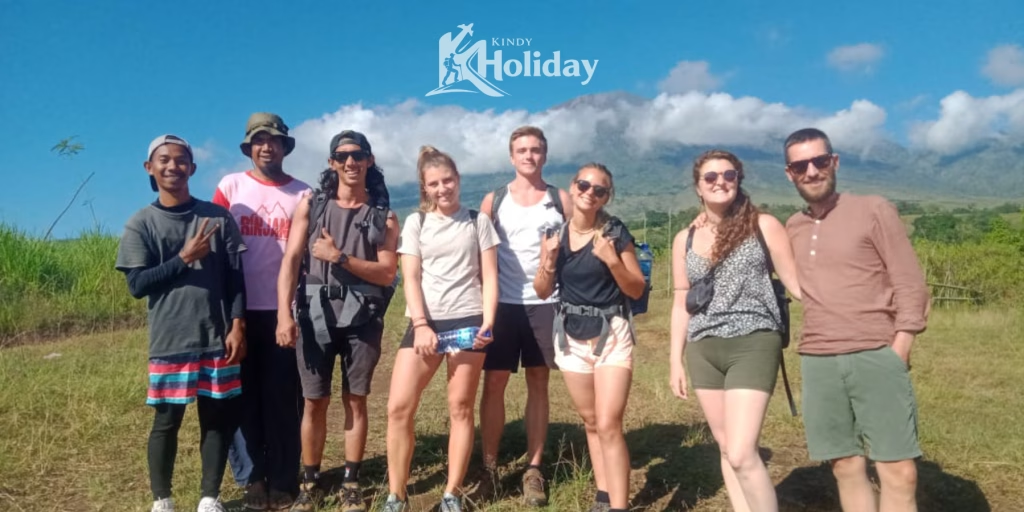
Choosing the best time to trek Mount Rinjani is a critical factor that directly influences safety, visibility, and overall trekking success. Understanding the best time to trek Mount Rinjani allows you to plan a safer and more rewarding adventure.
Located on Lombok Island, Mount Rinjani is shaped by a monsoon-driven tropical climate, which divides the year into distinct dry and rainy seasons. These seasonal patterns are not only observable but also well-documented in regional climate studies.
According to Climate-Data.org, Lombok experiences a clear seasonal contrast, with significantly higher rainfall during the early months of the year and much drier conditions mid-year. This pattern is further supported by long-term observations from WeatherSpark, which show that rainfall peaks between January and February and reaches its lowest levels around August.
In this context, understanding seasonal timing is essential. Trekking during the wrong period can result in poor visibility, slippery trails, and increased safety risks. On the other hand, choosing the right season significantly improves summit success rates and overall experience quality.
To plan your trek during the best season, explore available options here:
Rinjani Trekking Package
Mount Rinjani Trekking Season Explained
Mount Rinjani trekking is officially regulated by Mount Rinjani National Park, which determines when the mountain is open or closed based on environmental and safety considerations.
Official Trekking Season
- Open: April to December
- Closed: January to March
This closure is not arbitrary. It corresponds directly to the peak rainy season, when precipitation levels are highest and environmental risks increase significantly.
Data from WeatherSpark indicate that January typically has the highest number of wet days in Lombok, averaging more than half the month with rainfall. During this period, trails become unstable, visibility is reduced, and the risk of landslides increases.
Additionally, seasonal closure allows the ecosystem within Mount Rinjani National Park to recover from heavy tourist activity, reinforcing sustainable tourism practices.
Best Months for Mount Rinjani Trekking
To understand the best time to trek Mount Rinjani more precisely, the trekking season can be divided into three main periods based on rainfall patterns and weather stability.
Dry Season (May – September) – Best Time
The dry season represents the most optimal period for trekking Mount Rinjani.
According to climate data from WeatherSpark, rainfall during this period drops to its lowest levels of the year, with August recording the driest conditions.
Key advantages:
- Clear skies and high visibility
- Stable weather patterns
- Lower rainfall and safer trails
These conditions make the dry season ideal for summit attempts and photography.
Best suited for: Rinjani 2D1N Summit Trek
However, this is also the peak tourist season, meaning trails can be more crowded, especially in July and August.
Shoulder Season (April & October)
The shoulder season marks the transition between wet and dry periods.
Rainfall begins to decrease in April and gradually increases again in October. According to Climate-Data.org, these months show moderate precipitation levels compared to peak rainy months.
Key characteristics:
- Mixed weather conditions
- Occasional rain showers
- Fewer trekkers on the trail
This period can be suitable for those seeking a quieter trekking experience, although weather variability should be expected.
Late Season (November – December)
The late season signals the transition into the rainy period.
Rainfall increases significantly, and humidity levels rise. As a result, trekking conditions become less predictable.
Key challenges:
- Slippery and muddy trails
- Reduced visibility due to cloud cover
- Higher likelihood of rain interruptions
Recommended for flexible itineraries: Rinjani 4D3N Trekking Package
Longer trekking durations allow better adjustment to weather fluctuations.
When NOT to Trek Mount Rinjani
Trekking Mount Rinjani during the peak rainy season is strongly discouraged and officially prohibited.
Rainy Season (January – March)
During this period:
- Rainfall is at its highest level of the year
- Trails become extremely slippery and dangerous
- Visibility is often severely limited
- Landslide risks increase
According to WeatherSpark, January and February consistently record the highest precipitation levels in Lombok.
For these reasons, Mount Rinjani National Park closes all trekking activities during this period.
For safer alternatives during uncertain weather periods: Rinjani 2D1N Crater Rim Trek
Best Time to Trek Mount Rinjani by Month (Data-Based Guide)
To better understand the best time to trek Mount Rinjani, it is important to analyze monthly weather patterns based on long-term climate data.
- January – March: Heavy rain, trekking closed
- April: Transition, mixed conditions
- May – June: Stable weather, excellent trekking conditions
- July – August: Peak dry season, best visibility
- September: Still dry, fewer crowds
- October: Increasing variability
- November – December: Rising rainfall, less stable conditions
Temperature also varies significantly with altitude:
- Lowlands: ~27–32°C
- Crater rim: ~8–10°C at night
- Summit: can drop to near 0–5°C
This variation indicates that Mount Rinjani trekking involves multiple climate zones within a single expedition.
For the most complete experience during optimal conditions: Rinjani 3D2N Summit & Lake Trek
How Weather Affects Your Mount Rinjani Trekking Experience
Weather conditions on Mount Rinjani are not just a background factor—they directly shape the outcome of your trekking experience. Understanding how weather interacts with terrain and altitude is essential for making informed decisions. These factors clearly show why choosing the best time to trek Mount Rinjani is essential for both safety and overall experience.
Visibility and Scenic Quality
Clear weather significantly enhances the trekking experience, especially at the summit and crater rim. During the dry season, visibility is typically high, allowing trekkers to enjoy panoramic views of Lombok, Bali, and surrounding islands.
In contrast, cloudy or rainy conditions can obscure these views entirely, reducing one of the main rewards of the trek.
Trail Conditions and Safety
Rainfall directly affects trail stability. Volcanic sand and loose gravel—especially on the summit route—become much more difficult to navigate when wet.
Key impacts:
- Slippery trails increase risk of falls
- Muddy paths slow down trekking pace
- Higher risk of minor injuries
This is why trekking during the dry season is generally considered safer.
Temperature and Physical Endurance
Temperature drops significantly with altitude. While daytime temperatures in Lombok may feel warm, conditions near the summit can become extremely cold, especially before sunrise.
Wind exposure further amplifies this effect, making proper gear essential regardless of the season.
Summit Success Rate
Weather plays a major role in determining whether trekkers successfully reach the summit. Clear, stable conditions increase success rates, while poor weather can force early turnaround for safety reasons.
This relationship shows that timing is not just about comfort—it directly affects achievement.
Choosing the Right Trek Based on Season
Selecting the right itinerary should always be aligned with the best time to trek Mount Rinjani and current seasonal conditions. Different seasons require different strategies.
Dry Season (May – September) → Summit-Focused Trek
During the dry season, stable weather and clear skies make it ideal for reaching the summit.
Recommended options:
These packages maximize your chances of experiencing sunrise at the summit and clear crater views.
Shoulder Season (April & October) → Flexible Itinerary
During transitional months, weather conditions are less predictable. Flexibility becomes important.
Recommended option:
This itinerary allows more time to adjust plans based on weather conditions.
Late Season (November – December) → Longer & Safer Trek
As rainfall increases, shorter and more intense treks become riskier. A longer itinerary allows for safer pacing.
Recommended options:
These packages provide:
- More recovery time
- Greater flexibility
- Reduced physical pressure per day
Explore all trekking options here: Rinjani Trekking Package
Tips for Trekking Mount Rinjani in Any Season
Proper preparation remains essential regardless of when you trek.
1. Choose the Right Season for Your Goal
- Summit success → Dry season
- Fewer crowds → Shoulder season
- Scenic exploration → Longer trek
2. Prepare for Temperature Variations
Even during dry months, temperatures at higher altitudes can drop close to freezing. Always bring layered clothing.
3. Book in Advance During Peak Season
July and August are the busiest months. Booking early ensures availability and better logistics.
4. Use a Professional Trekking Operator
Licensed guides are required by Mount Rinjani National Park and play a crucial role in safety and navigation.
5. Stay Flexible with Weather Conditions
Mountain weather can change quickly. Being adaptable increases both safety and enjoyment.
Plan Your Mount Rinjani Trekking at the Right Time
Choosing the best time to trek Mount Rinjani is not simply about avoiding rain—it is about optimizing the entire trekking experience. By aligning your trekking schedule with seasonal patterns and selecting the right package, you can significantly improve the quality of your journey.
Start planning your adventure today with Kindy Holiday:
Pingback: Mount Rinjani Trekking Guide: 9 Important Things to Know