
Mount Rinjani is one of the most iconic trekking destinations in Southeast Asia, attracting hikers with its dramatic volcanic landscapes, breathtaking summit views, and diverse ecosystems. However, beyond its natural beauty, one key factor significantly shapes the trekking experience: choosing the right route.
Among the available trails, two routes are most frequently compared—the Sembalun route and the Torean route. Each route offers a distinct trekking structure, level of difficulty, and type of scenery. Understanding these differences is essential for trekkers who want to match their physical ability with their travel expectations.
If you are planning your trip, you can explore all available options through our Rinjani trekking packages.
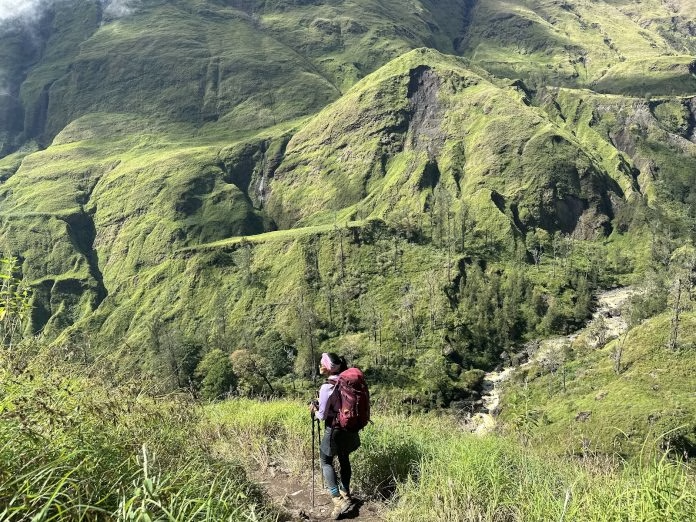
Overview of Rinjani Trekking Routes
Mount Rinjani has several official trekking routes, each representing a different type of hiking experience. The main routes include:
- Sembalun Route – the most popular path for reaching the summit
- Senaru Route – commonly used for crater rim trekking
- Torean Route – a scenic alternative known for its natural diversity
Among these, the comparison between Sembalun and Torean has become increasingly important. This is because both routes represent two contrasting trekking approaches:
- The Sembalun route focuses on efficiency and direct access to the summit
- The Torean route emphasizes exploration and scenic richness
As a result, choosing a route is not only about reaching the summit, but also about defining the overall trekking experience.
Sembalun Route – The Classic Path to the Summit
Key Features of Sembalun Route
The Sembalun route starts from Sembalun Village, located on the eastern side of Mount Rinjani. This trail is well-known for its wide savanna landscapes and relatively gradual elevation gain in the early stages.
The route can be divided into several main segments:
- Savanna Zone – open grasslands with steady inclines
- Base Camp (Plawangan Sembalun) – main camping area before the summit push
- Summit Ridge – steep volcanic terrain leading to the peak
This structure makes the Sembalun route more predictable and easier to navigate compared to other routes.
Difficulty Level
In terms of physical demand, the Sembalun route is considered challenging, especially during the summit push. The final ascent usually begins around 2–3 AM and involves loose volcanic gravel, making each step more exhausting.
The difficulty can be summarized as:
- Moderate in the early stages (savanna trekking)
- Strenuous during the summit push (steep and unstable terrain)
- Highly endurance-based rather than technical
Therefore, this route is ideal for trekkers whose main goal is to reach the summit and who have good physical stamina.
Highlights
The Sembalun route offers some of the most iconic experiences on Mount Rinjani:
- Spectacular sunrise from the summit (3,726 meters)
- Wide open savanna landscapes
- Panoramic views with minimal forest obstruction
These features make Sembalun the preferred route for summit-focused trekkers.
Best Trekking Packages via Sembalun
If your priority is reaching the summit efficiently, these trekking programs are designed around the Sembalun route:
These packages offer different durations and pacing, allowing trekkers to choose according to their schedule and fitness level.
Torean Route – The Scenic Hidden Gem
Key Features of Torean Route
In contrast to the open landscapes of Sembalun, the Torean route offers a completely different trekking environment. Starting from Torean Village, this trail passes through dense forests, river valleys, and scenic waterfall areas.
The route can be categorized into several sections:
- Forest Trails – shaded paths with rich vegetation
- River and Waterfall Sections – natural crossings and resting spots
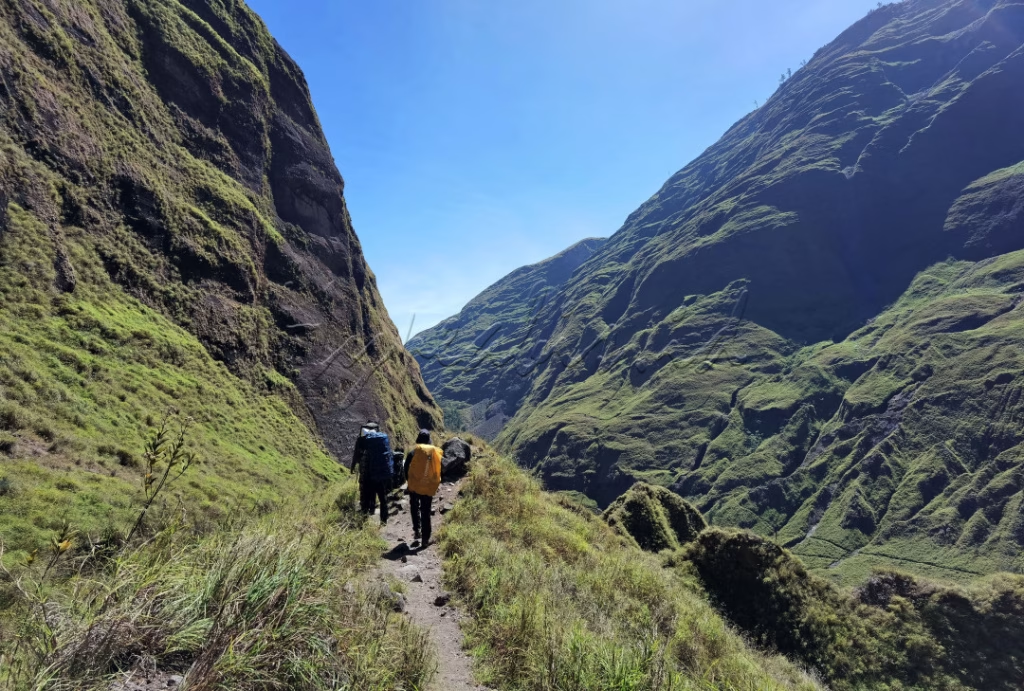
- Valley Trails – narrow paths with dramatic cliff views
This variation creates a more dynamic and immersive trekking experience.
Difficulty Level
The Torean route is often considered more complex, not because of steep elevation gain, but due to terrain diversity.
Key challenges include:
- Narrow and uneven trails
- River crossings and slippery paths
- More technical navigation compared to Sembalun
For this reason, the Torean route is generally recommended for trekkers with prior hiking experience.
Highlights
The main attraction of the Torean route lies in its natural beauty and diversity:
- Hidden waterfalls along the trail
- Lush green valleys and dramatic cliffs
- A quieter, less crowded trekking environment
This route is ideal for those who value the journey as much as the destination.
Best Trekking Packages Including Torean
For a more complete and immersive trekking experience, Torean is typically included in longer itineraries:
These packages often combine multiple routes, allowing trekkers to experience both the summit and the scenic side of Mount Rinjani.
Sembalun vs Torean – Key Differences in Rinjani Trekking Routes
When comparing the Rinjani trekking routes, the difference between Sembalun and Torean becomes more apparent when analyzed across several key aspects. Each route offers a distinct trekking structure, which directly affects the overall hiking experience.
Landscape Comparison
The most noticeable difference in these Rinjani trekking routes lies in the landscape.
- The Sembalun route is dominated by open savanna terrain, offering wide visibility and unobstructed views throughout the trek.
- The Torean route, in contrast, features dense forests, river valleys, and waterfalls, creating a more enclosed and diverse natural environment.
This shows that among the available Rinjani trekking routes, Sembalun emphasizes panoramic openness, while Torean prioritizes ecological richness.
Difficulty Comparison
In terms of difficulty, both Rinjani trekking routes present different types of challenges:
- Sembalun route → physically demanding due to long distances and steep summit ascent
- Torean route → technically challenging due to uneven terrain, narrow paths, and river crossings
Thus, while both are considered challenging Rinjani trekking routes, the nature of the difficulty differs significantly.
Trekking Experience
The trekking experience is where the contrast between these Rinjani trekking routes becomes more experiential:
- The Sembalun route is goal-oriented, focusing on reaching the summit efficiently
- The Torean route is journey-oriented, emphasizing exploration and scenic immersion
This distinction highlights how Rinjani trekking routes can offer either a performance-based or experience-based adventure.
Crowd Levels
Another important factor in choosing between Rinjani trekking routes is crowd density:
- Sembalun route → more popular and often crowded during peak season
- Torean route → quieter and less frequently used
For trekkers seeking solitude, Torean stands out among the available Rinjani trekking routes.
Accessibility
Accessibility also differentiates these Rinjani trekking routes:
- Sembalun route has better infrastructure and is easier to organize
- Torean route requires more logistical preparation and is less standardized
Therefore, from a logistical perspective, Sembalun is the more accessible option among the main Rinjani trekking routes.
Which Rinjani Trekking Route is Best for You?
Choosing between the available Rinjani trekking routes depends on your trekking goals, experience level, and time availability.
For Beginners
If you are new to high-altitude trekking, the Sembalun route is generally more suitable. Its clear trail structure makes it one of the most beginner-friendly Rinjani trekking routes, despite the physical challenge.
For Experienced Trekkers
For those with prior trekking experience, the Torean route offers a more adventurous option among the Rinjani trekking routes, with varied terrain and less predictable conditions.
For Summit Seekers
If your main goal is reaching the summit, the Sembalun route remains the most efficient choice among all Rinjani trekking routes.
You can explore summit-focused programs here:
For Scenic Exploration
If you prioritize landscapes and unique trekking experiences, the Torean route is one of the most visually rewarding Rinjani trekking routes.
Recommended Rinjani Trekking Itineraries
Different durations allow trekkers to experience the Rinjani trekking routes in different ways.
Short Treks (2D1N)
Short treks focus on efficiency and are usually based on the Sembalun route:
These are ideal for trekkers with limited time who still want to experience key Rinjani trekking routes.
Medium Treks (3D2N)
A 3-day trek provides a more balanced experience across the Rinjani trekking routes, combining summit attempts with lake exploration:
Long Treks (4D3N & 5D4N)
Longer treks allow you to fully explore multiple Rinjani trekking routes, often combining Sembalun ascent with Torean descent:
These itineraries provide the most comprehensive experience of the available Rinjani trekking routes.
Tips for Choosing the Right Rinjani Trekking Route
Before deciding among the Rinjani trekking routes, consider the following factors:
- Physical fitness → summit routes require strong endurance
- Time availability → shorter vs longer itineraries
- Scenery preference → open landscapes vs lush forests
- Weather conditions → seasonal factors affect trail difficulty
Carefully evaluating these aspects will help you select the most suitable option among the various Rinjani trekking routes.
Book Your Rinjani Trekking Adventure
After understanding the differences between the Rinjani trekking routes, the next step is choosing a trekking program that matches your goals. You can explore all available options and find the best itinerary through our Rinjani trekking packages
Conclusion
Based on the comparison of Rinjani trekking routes, several key points can be identified:
- The Sembalun route offers a structured and efficient path to the summit.
- The Torean route provides a more scenic and diverse trekking experience.
- Each route represents a different trekking orientation—goal-focused versus experience-focused.
- The choice of route should be aligned with physical ability, available time, and personal preferences.
These findings indicate that understanding the characteristics of Rinjani trekking routes is essential in designing a trekking experience that is both achievable and rewarding.